Keypad vs. Intercom vs. License Plate Recognition: Gate Access Control Compared
Keypad vs. Intercom vs. License Plate Recognition: Gate Access Control Compared
A gate does two jobs: it keeps the wrong vehicles out, and it lets the right ones through without a fuss. Access control is where that second job lives. Pick the wrong method and you spend your evenings answering buzzers, handing out codes that spread like gossip, or waving in a delivery driver because the camera cut out. The three workhorses are keypads, intercoms, and license plate recognition. Each is excellent at something the others handle badly.
The right choice depends less on the technology itself and more on your traffic. A quiet duplex with two cars and a weekly gardener has different needs than a 60-unit condo with rideshares, food delivery, contractors, and tenants who change every year. The goal is not to buy the most advanced option. It is to buy the option that makes the ordinary day smooth and the bad day manageable.
How Each Option Works at the Gate
All three end in the same place: a relay closes, and the gate swings or slides open. What differs is how each system decides you belong there.
Keypads
Someone types a code, the gate opens. Standalone models run on batteries in a weatherproof housing and store a handful of codes. Networked models allow a unique code per person, time restrictions, and a log of who came and went. That difference matters more than the price gap suggests. A shared code tells you nothing after the fact. A unique code can tell you that the same contractor arrived at 9:14 a.m. on Tuesday, or that a code belonging to a former tenant was used last night.
Keypads also handle temporary access well. You can give a housekeeper a code that works only on Thursdays, a real estate agent a code that expires in 48 hours, or a delivery driver a one-day code instead of the family’s permanent number. The weakness is human nature: people share codes, write them on receipts, and forget to delete them when circumstances change.
Intercoms
A visitor presses a call button. You answer from the house, an office handset, or a phone app, then release the gate. Audio-only units are inexpensive; video units let you see who is standing there, which changes the conversation. Older systems needed a wire back to the building, but cellular and IP intercoms now work where no cable exists.
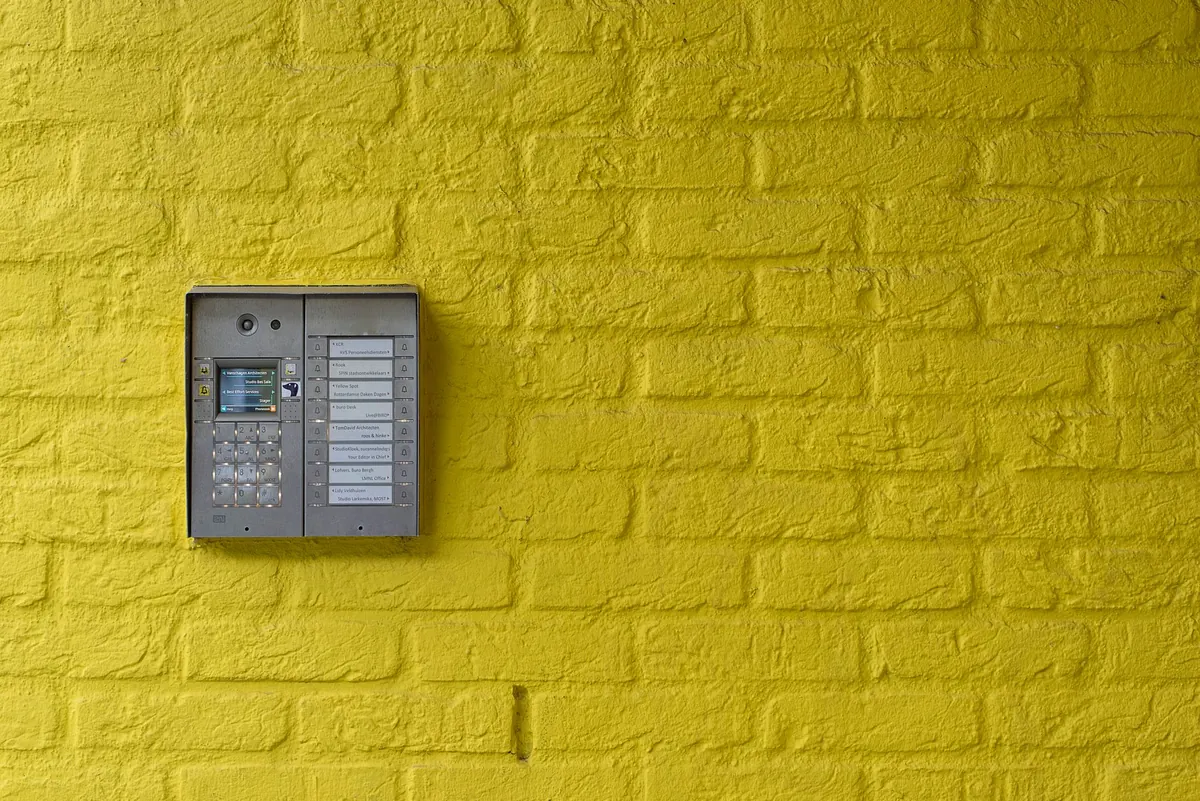
For multi-tenant properties, an intercom can present a directory so a visitor selects the right unit instead of calling a manager. For a single home, call forwarding to a mobile phone means you can open the gate from the grocery store. A video intercom is especially useful for deliveries: you can see the uniform, the truck, and the package before deciding whether to release the gate or ask the driver to leave it at the curb.
License plate recognition
A camera reads the plate as the car approaches, software compares it against a list, and the gate opens. No code, no call, no stopping. When it works, it is invisible. When it doesn’t — a dirty plate, a bike rack, headlight glare at dusk — the driver sits there wondering why the gate hates them.
LPR shines when the same vehicles arrive dozens of times a day: residents, staff, tenants, and regular contractors. It can also trigger a call instead of opening the gate, so an unknown plate rings the intercom while a known plate rolls straight through. That hybrid behavior is often more practical than treating LPR as an all-or-nothing gatekeeper.
Cost: Up Front, and Every Year After
Keypads cost the least to buy and install. Intercoms sit in the middle, with video pushing the price up. LPR costs the most, and it keeps costing: cameras, software, sometimes a subscription, and the network to carry the images.
As a rough guide, a basic standalone keypad may cost less than a single video intercom, while a multi-lane LPR system can run into thousands of dollars per lane before installation. Those numbers vary by market, brand, and whether you need one gate or four. The more important comparison is total cost over five years, not the sticker price on the box.
The line item that surprises people isn't the device. It's getting power and network to the gate. If your gate sits 300 feet from the nearest outlet, trenching and wiring can easily exceed the price of the hardware itself. Trenching through lawn is one project; cutting through asphalt, concrete, or landscaping is another. Ask for a quote that separates equipment from infrastructure, so you can see what you are actually buying.
Running costs follow the same order. A basic keypad costs nothing to operate and a few minutes a year to manage. An intercom may need a phone line, a cellular plan, or a monitoring service. LPR needs a stable network, occasional lens cleaning, and software you keep current. If the software subscription lapses, the gate may stop recognizing anyone at all.
Convenience: Fast for Whom?
Every option is fast for somebody and irritating for someone else. The trick is knowing which group you are serving.
- Keypad: fastest for the people who live or work behind the gate. Slowest for guests, who need the code ahead of time and usually end up calling from the driveway anyway.
- Intercom: best for unexpected visitors, deliveries, and anyone who should be seen before they are let in. The catch is that someone has to be reachable and willing to answer, at 7 a.m. and at 11 p.m.
- LPR: unbeatable when the same vehicles arrive dozens of times a day — staff, tenants, regular contractors. Nearly useless for a first-time guest unless you loaded their plate in advance.
Think about the worst-case day, not the average one. What happens when a guest arrives while you are in a meeting, when the power goes out, or when a plumber shows up in a truck nobody thought to add? A keypad can still work on battery backup. An intercom may fail if the network or phone line goes down. LPR may go offline entirely, leaving even residents stranded until someone opens the gate manually.
Security: What Each One Actually Stops
None of these systems stops a determined intruder. They manage routine access, and they all share one weakness: tailgating. A car that follows another car through an open gate never touches the keypad, never calls, never gets read.
Where they differ is how they fail.
- Keypads leak. Contractors share codes, family members text them, and a worn keypad shows which keys get pressed. Short codes are guessable. Use a unique code per person or household, five or six digits, and change them when someone moves out or a contractor's job ends.
- Intercoms depend on judgment. A friendly voice can talk you into opening the gate, especially if you are distracted. Video reduces that risk by showing the person, the vehicle, and the context. Keep a log of calls if the system supports it, and never buzz in someone who cannot explain why they are there.
- LPR can be fooled by cloned plates, stolen plates, and trailers that hide the rear plate. It also creates a false sense of completeness: if the camera cannot see the plate, the system treats a legitimate resident like a stranger. Clean the lens, angle the camera correctly, and keep a manual backup for exceptions.
For higher security, pair access control with anti-tailgate measures: a loop detector that prevents the gate from closing on a second car, a short close delay, or a guard who watches the lane during busy hours. Technology handles the routine. People and design handle the exceptions.
Reliability and Maintenance: What Breaks, and How Often
Keypads are the most robust in bad weather because they have few moving parts. Their common failures are dead batteries, worn buttons, and water intrusion in cheap housings. A five-minute cleaning and a battery change once a year usually keeps them alive.
Intercoms depend on the weakest link: the phone line, the cellular signal, the network switch, or the app server. Video units add a camera lens that collects dust, spiderwebs, and rain spots. When an intercom fails, visitors cannot ask for help, so you need a fallback such as a temporary code or a posted phone number.
LPR is the most maintenance-hungry. The camera must stay aligned, the software must be updated, and the plate list must be current. Snow, mud, glare, and temporary tags cause read failures. In a busy lane, even a 5 percent failure rate means several frustrated drivers every day. Budget for someone to check the system monthly, not just when it breaks.
Hybrid Systems: The Best Setup Is Often Two Methods
You do not have to choose only one. Many properties combine LPR for residents, an intercom for visitors, and a keypad for service providers. A resident’s car opens the gate automatically. A guest presses the intercom button, and you release the gate after seeing them on video. A landscaper uses a code that works only on weekdays between 8 a.m. and 4 p.m.
A common hybrid pattern is LPR plus intercom. Known plates open the gate. Unknown plates trigger a video call to the office or a mobile app. Another pattern is keypad plus intercom: visitors call first, and you give them a one-time code instead of opening the gate remotely. The key is a controller that accepts multiple inputs, so the gate does not care which method granted access.
The best gate access system is not the one with the longest feature list. It is the one that matches your traffic, your staffing, and your tolerance for exceptions.
How to Choose: A Practical Decision Framework
Ask these questions before you buy:
- Who arrives most often? If they are the same vehicles, LPR wins. If they are new people, an intercom wins. If they are trusted but numerous, a keypad may be enough.
- Is someone available to answer? An intercom is only as good as the person on the other end. If no one can respond at 2 p.m. on a Tuesday, LPR or a code is more realistic.
- What infrastructure already exists? Power and network at the gate change the budget more than the brand. If you have neither, a battery keypad may be the practical first step.
- How much administration can you handle? LPR needs a clean plate list. Keypads need code discipline. Intercoms need call coverage. Pick the burden you are willing to carry.
- What happens when it fails? Every system fails eventually. Plan a manual override, a temporary code, or a posted phone number so a bad camera does not become a blocked driveway.
For a single home with a few regular drivers, a keypad or a video intercom is often enough. For a business park with daily staff and occasional visitors, LPR plus intercom is hard to beat. For an apartment building with high turnover, a networked keypad plus intercom gives managers control without forcing every guest to wait for a camera read. Match the method to the traffic, and the gate will do its two jobs quietly: keep the wrong vehicles out, and let the right ones through without a fuss.
Photo: Jan van der Wolf / Pexels